Dose Per Batch vs Dose Per Serving – What People Mess Up with CBD
When it comes to adding CBD to beverages or recipes, the most common mistake isn’t which product you choose, but how you dose it. Whether you’re a home bartender, a chef, or a beverage developer, the distinction between dosing CBD per batch versus per serving is critical. Get it wrong, and you end up with uneven potency, poor flavor, or worse—a bunch of wasted ingredients that don’t deliver as promised.
In this deep dive, we’ll unpack the real challenges of CBD dosing, especially with fat-friendly cannabinoids, and why simple tinctures—even premium products like Joy Organics USDA certified organic tinctures—often fall flat in clear, cold drinks. We’ll also tackle the solutions that actually work, from trusty kitchen tools like olive oil and butter to advanced emulsifiers like gum arabic and lecithin, and the promising world of water-soluble or nanoemulsified CBD. If you care about CBD portion control and avoiding the dreaded even distribution problem, read on.
Why Cannabinoids Are Lipophilic – The First Hurdle
Let’s start with some kitchen chemistry. Cannabinoids like CBD and THC are lipophilic, meaning they’re fat-loving molecules. They dissolve readily in fats and oils, but stubbornly resist water. This is why your Joy Organics tinctures or any CBD oil naturally mixes well in butter or olive oil, but struggle to stay suspended in water-based drinks.
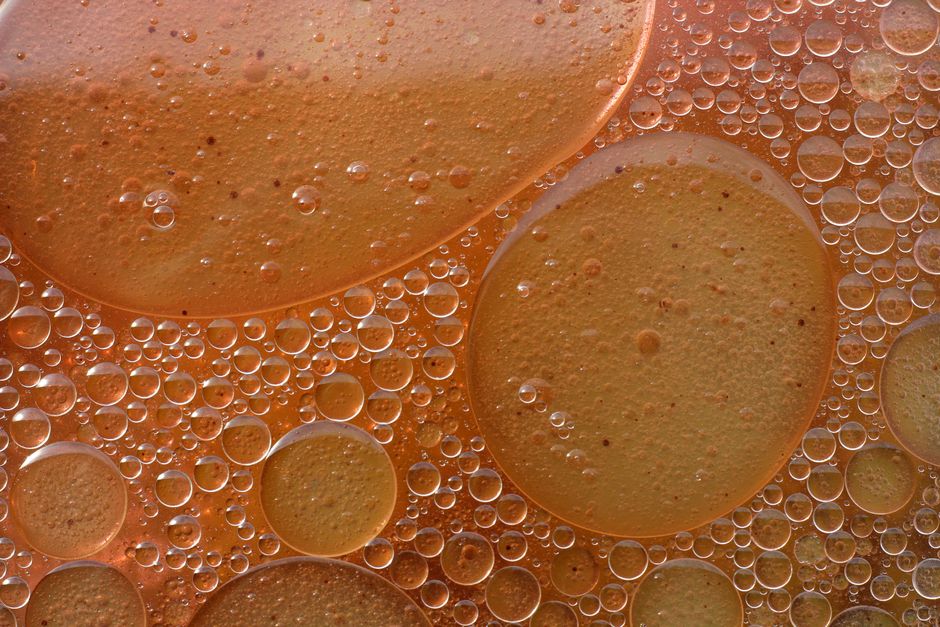
The lipophilic nature explains why people often see their CBD separate out when added to clear beverages. You know the situation: you pour in a few drops or milliliters, stir quickly, and half of the mixture floats on the surface or sinks to the bottom. Without proper emulsification, the CBD isn’t just visually unappealing—it’s unreliable in dose and flavor distribution.
Shake Before Serving Isn’t Just a Suggestion
You’ve probably seen instructions on tinctures like “Shake well before serving.” This is no marketing fluff. When you dose tinctures per serving directly into drinks without stirring or shaking vigorously, you risk uneven distribution. A drop or two may disperse unevenly, leading to some sips loaded with CBD, and others with none.
For home use, vigorous shaking or stirring can help, but it’s not a scalable solution for restaurants or beverage kits. Even with shaking, tinctures can still separate quickly, especially in cold or clear drinks where the natural oils resist mixing.
Dose Per Batch vs Dose Per Serving: What’s the Difference?
One of the most overlooked mistakes in CBD dosing comes down to math and method:
- Dose per serving means adding the exact amount of CBD intended for a single drink or portion at the point of serving.
- Dose per batch means mixing all the CBD into the entire volume of your recipe—cocktail batch, sauce, or baked good—so it’s evenly distributed before portioning into individual servings.
Intuitively, dose per serving sounds easier—you just add a measured amount at the end of preparation. But in practice, dosing per serving with lipophilic tinctures or oils risks inconsistent results.
Imagine a pitcher of ice-cold sparkling water. You add a few milliliters of CBD tincture right before pouring. The oil separates and floats, ending up mostly in the first few glasses. The last drinkers get little to no CBD. This scenario creates an even distribution problem and frustrates customers or guests expecting uniform potency.
By contrast, if you pre-mix the CBD tincture into the batch with an emulsifier, you spread it evenly throughout the liquid. Each portion, whether poured immediately or over time, contains the same effective dose.
Why More People Mess Up Dose Per Serving
It often comes down to convenience and tradition:
- Convenience: Adding CBD at the point of service seems simple—no need to fuss with mixing large batches or emulsification.
- Product labeling: Many tinctures only provide dosage per milliliter or drop but no guidance on how to portion for batch use.
- Misunderstanding of solubility: Many users don’t realize CBD oils don’t mix evenly in water-based drinks without help.
- Flavor masking: When dosing per serving, bitter or vegetal notes may be more pronounced because the CBD isn’t blended or balanced across the batch.
On the flip side, dosing per batch requires advance planning, math, and often, knowledge of emulsification science—steps many bartenders or home cooks gloss over.
Tools and Solutions for Effective CBD Dosing
Olive Oil and Butter: Simple Kitchen Allies
Because cannabinoids are fat-soluble, mixing CBD into olive oil or melted butter is a classic and reliable method. This works especially well for infused oils, dressings, or baked goods:
- The fats act as a carrier to dissolve the CBD evenly.
- In hot applications, heat gently to avoid burning the cannabinoids (stay under 160°F).
- Measure your batch size and calculate total CBD milligrams to add for consistent CBD portion control.
Olive oil and butter won’t help in clear, cold drinks—but they’re perfect for cocktails with infused syrups or hot beverages like CBD coffee.
The Magic of Emulsifiers: Gum Arabic and Lecithin
When you want to get CBD evenly dispersed in water-based beverages, emulsifiers are your secret weapon. Two kitchen-safe emulsifiers stand out:
Emulsifier How It Works Use Cases Notes Gum Arabic Natural gum from acacia trees; stabilizes oil droplets in water Juices, lemonade, cocktails Requires vigorous blending to form stable emulsions Lecithin Phospholipid that bonds with oils and water; common in chocolate and dressings Dressings, sauces, some beverages Can impart slight flavor; test concentrations carefullyBoth require trial and error to get right, especially at home or craft scales. But they dramatically improve suspension, reduce separation, and allow dosing per batch with reliable homogeneity.
I keep a notebook on emulsifiers and have found that the key to success is not just adding gum arabic or lecithin, but rigorous high-shear blending and temperature control to avoid breaking the emulsion.
Water-Soluble and Nanoemulsified CBD: The Future-Proof Option
If you’ve tried tinctures or oils in sparkling water and tasted the bitter, oily residue—congratulations, you’ve experienced why many experts click here say traditional tinctures aren’t ideal for cold, clear beverages.
Enter water-soluble and nanoemulsified CBD formulations. These advanced products break CBD into ultra-fine particles encapsulated with emulsifiers or delivered as true water soluble powders:
- They’re designed for complete and rapid dispersion in water.
- Dosing per batch is straightforward and produces consistent results without separation.
- They are typically more stable and provide better bioavailability because of increased surface area.
If your business or DIY project revolves around sparkling water, soda, tea, or cold-pressed juice, look for labs or suppliers specializing in water-soluble or nano CBD. These solve the even distribution problem once and for all.
CBD Portion Control: Doing The Math Right
Whatever your dosing philosophy—per serving or per batch—precise math is non-negotiable. Vague instructions like “a dropperful” or “a few droplets” drive me nuts (and any serious beverage trainer). Instead, you need to know exactly how many milligrams of CBD are going into your recipe.
Here’s a quick example of batch dosing:
- Your Joy Organics tincture is 30 mL containing 750 mg of CBD total.
- You want to make a 1 liter (1000 mL) batch of lemonade.
- Your target dose is 10 mg of CBD per 250 mL glass.
- That means your entire liter batch needs 40 mg CBD (10 mg x 4 servings of 250 mL each).
- Calculate volume of tincture needed: (40 mg) / (750 mg/30 mL) = 1.6 mL of tincture.
If you dose the entire 1L batch with 1.6 mL tincture and mix thoroughly with an emulsifier, each 250 mL glass will get roughly 10 mg CBD. If you try dosing 1.6 mL per serving, you’ll wildly overdose and waste product.
Remember—always do the mg math out loud before you start, and measure carefully.
Common Missteps and How to Avoid Them
Here’s a quick checklist of pitfalls and tips to keep your CBD beverages on point:
- Don’t add tincture directly into clear or sparkling water at serving; expect separation and inconsistent dosing.
- Never skip shaking or stirring; however, shaking alone won’t stabilize your mix.
- Use fat carriers like olive oil or butter for fat-based recipes; remember to dose per batch and stir well.
- Incorporate gum arabic or lecithin if you want stable emulsions in water-based drinks.
- Consider water-soluble or nano CBD when working with cold, clear beverages; they cost more but save headaches.
- Never guess doses based on ambiguous measurements; calculate exact mg per batch and per serving.
- Test your batches! Try sampling at different points in the batch pour to check even distribution.
Wrapping Up: Dosing CBD Is Neither Magic Nor Mystery
CBD dosing isn’t a “just add a dropperful” situation. Whether you use top-tier tinctures like Joy Organics USDA certified organic tinctures, or DIY kitchen fats and emulsifiers, understanding the science behind lipophilicity, emulsification, and dosing math transforms your experience.
By prioritizing dose per batch with proper mixing and emulsification—rather than winging doses per serving—you nail consistent effects, flavor, and customer satisfaction. And if you’re set on cold, clear drinks, don’t settle for basic tinctures. Invest in water-soluble or nanoemulsified CBD for that professional edge.
So next time you’re prepping CBD drinks or dishes, grab your tiny notebook, do the mg math out loud, choose an emulsifier or fat-based carrier, and shake (or better yet, blend) with care. Your taste buds—and your diners—will thank you.